Saturday, July 31, 2010

Dream Job: Then and Now

*image above from two new spots I'm making for Sesame Workshop.

As a kid I hated the taste of coffee, onions, and alcohol––I couldn't figure out why adults tortured themselves so. And now? I consume all three in a meal called brunch. Back then, I also wanted to work for Walt Disney, thinking that was the only place to work in animation. But, as with coffee, onions, and alcohol, I eventually changed my opinion (not that I was suited for a job at the House of Mouse anyhow).

I can't say exactly where and when that happened but one step in that direction was definitely when my SVA animation career strategy teacher, Linda Simensky, booked Mo Willems as a guest speaker. This was my introduction to Mo and his work. The filmmaker and future children's book author was deep in his Sesame Street phase at the time, turning out little animated films starring his creation Suzie Kabloozie. In Simensky's class, Mo screened some of those spots, along with all the films he made while still a student at NYU, including The Man Who Yelled and Iddy Biddy Beat Boy. It was easy to see that the hallmarks of Mo's personal work also made it into his Sesame films.

*image above from a Mo Willems Suzie Kabloozie short for Sesame.

At the time I was awed by Mo's Sesame work, and my Disney dream started to fade. Flash forward to present day 2010 and I'm beginning my second set of six original films for Sesame Street's Word on the Street series. While I admire Mo's singular approach to his films, my goal for the 12 spots has been to try different styles, hopefully so it might appear as if a different animator made each film. Yet, I know that's not really possible, because anything we do will have a certain personal stamp, but having a goal for variety has helped keep it loose and fun for me.

The blessing and curse of these little productions is that they have to be finished one per week, otherwise it would blow the schedule and the budget. This means I try to keep them within one location with no more than one or two characters and backgrounds. Working this quickly is almost like improv, especially in the writing. For instance, on the second spot of the new batch I'm currently making, the word is "Cling," and I didn't really know what the story would be as I started drawing the storyboards. But, happily, it just popped out as I drew, and within a half a day I had an animatic that the client approved and loved. I wouldn't want to have to work this quickly on everything I take on, but I find that it's a really fun challenge. There's no time to procrastinate or second guess yourself. It's just go, go, go!

With this new set of Sesame films, despite the same time and budget limitations, I'm trying to improve on the first six. It's one thing for the client to be happy, but it's quite another to make films that stand alone, even outside their educational context. All this gets all the more complicated because (like most animation artists), I'm never satisfied with my own work. All I see are compromises, mistakes, and things I could do better if only I had another week.

But all considered, so many years after giving up on a future at Disney, this scrappy little project is what I now consider to be a dream job. Maybe the seed was planted when I saw Mo's films, but I have come to believe that successful and effective animated filmmaking has less to do with slick drawings or art, or unlimited resources of time and money, and much more to do with heart, good storytelling and filmmaking, and the ability to express ideas in the clearest and most concise manner. Over the course of a career dreams change, as can a personal definition of "dream job."

Friday, July 23, 2010

Inspiration City

*images above and below from Stephen and Joel Moss Levinson's pilot, currently called "Noah's Ark."

Two weeks ago I posted a piece inspired by Meredith Gran, congratulating the artist on her first published work. It's been said, inspiration is wherever you find it, and this week I unexpectedly found it again.

As an author, I speak at a few animation industry events each year, and one of the benefits is that it serves as my introduction to some interesting people in the audience. This past April, fellow filmmaker Elliot Cowan and I gave a talk for The New York Television Festival on the subject of animation development. In the audience was Stephen Levinson, who works at Comedy Central's on-line division, and has aspirations to helm his own series.

Since my book Animation Development: From Pitch to Production was published, I've been contacted by one or two creators a week, wishing to show me their pitches for advice, encouragement, or help finding development executives. For those who haven't read my book, the answer is simple: "Read the book and if you still have questions on development or pitching, let me know."

I don't have the time to counsel on one or two projects a week, nor do I want the potential legal nightmare that goes with that––so it's rare that I'll check out a pitch by a perfect stranger. But that's just what I did this week. And I'm glad I did.

Shortly after the April panel, Stephen Levinson friended me on Facebook. Last week he wrote me that he and his brother, Joel Moss Levinson, created an eight-minute animated pitch film featuring the voice of a major comedy figure, Jonathan Katz. This got my attention, especially since the comedian is one of my all-time favorites. So, Stephen and I made a plan to meet for drinks in my neighborhood so he could give me a copy of his DVD and his two-sheet pitch proposal. Their self produced pilot, based around Noah's Ark, is an outgrowth of a series of shorts they made called God & Company for the on-line Jewish magazine Tablet.
Stephen and his brother are smart cookies, instinctually making some very good moves when they developed their project. First off, when looking for a subject for a pitch, they thought back to some childhood skits they would perform for their family at holiday time. Second, they wrote a tight script with full-blooded characters, and third, they took a chance and asked top comedians, without knowing any of them personally, if they would come aboard and voice their soundtrack for free. Guess what? They all said yes! The key was getting the main comedian to sign on, after which all the other talent followed suit. Like I said, the Levinsons are smart cookies. When I expressed my amazement that he landed such big-name actors to voice his film he agreed, "I know, I still can't believe it myself."

I've already watched their self-made pilot twice and plan to watch it a few more times. It's terrific. These brothers are funny guys with a sharp vision. When I asked Stephen what his brother did for a living, he told me he was a professional video contest winner living on prize money won from corporate video contests. So, next time Crystal Light lists a video contest on the back of their box, think of Joel Moss Levinson.

I love being around people like Stephen that dream big, follow through, and despite their accomplishments, hold onto an "Aw shucks, I can't believe we pulled it off" attitude. Besides the amazing soundtrack, the pilot was animated under the expert supervision of head animator Ed Mundy (Archer, Sealab 2021), and designed by illustrator Mike Herrod.

The brothers have just begun to pitch their project but are already feeling a major sense of success and achievement. And isn't that what it's all about? Very inspiring stuff indeed.

I wonder what kind of inspiration I'll find next week?

Friday, July 16, 2010

The "No" list

The older I get the less interested I seem to be in mainstream animated features. For instance, despite the fact that lots of people recommended it, I never did get my butt to the theatre to check out How to Train Your Dragon. And, it's not because of an anti-Dreamworks bias. I liked Kung Fu Panda, but, even if you've seen and enjoyed a few modern mainstream CGI animated films, after a while it becomes impossible to keep up with them, and more importantly, apathy can set in. A good CGI animated feature is like a decent piece of bubble gum. While chewing gum brings some pleasure, it doesn't mean that I need to try every new gum that wads up on the bottom of my shoe. I don't have that kind of interest in gum, shoes, or in these animated features.

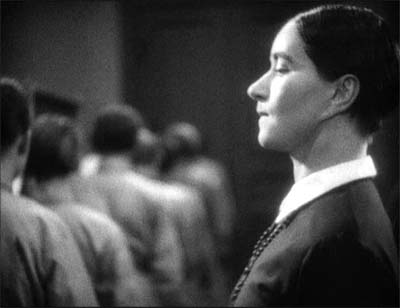
This doesn't mean I'm not seeing other types of films playing in theaters. My wife, who has a far wider knowledge of cinema than I, has been a good influence on me–– expanding my horizons to take in more diverse films from the past and present. We recently attended theatrical screenings of a pair of Weimar Germany-era silent classics Diary of a Lost Girl (1929) and Metropolis (1927), the gripping B-movie noir classic, Nightfall (1957), as well as a pair of recent documentaries, Joan Rivers: A Piece of Work and Two in the Wave, which is about French New Wave directors Godard and Truffaut.

*image above from Diary of a Lost Girl.

On DVD (thank you Netflix!), we just watched Sydney Pollack's thrilling Three Days of the Condor (1975), William Wyler's tense drama The Children's Hour (1961), Roman Polanski's haunting Repulsion (1965), as well as Mel Stuart's appealing and light If It's Tuesday, This Must Be Belgium (1969).

*image above from Repulsion.

When you explore the whole spectrum of films that are available to watch, (even if it's just putting a toe in the water like me), it can give you a new perspective on the mainstream American animated feature. In short, when did the facial expressions and body language of "funny man" Jim Carrey replace our once-cherished The Illusion of Life? When did every animated character start moving, acting, and behaving the same way? Need an example? Check out the trailer to Disney's upcoming Tangled. I'm not the first to observe that in mainstream theatrical animation attitude has replaced personality, and formula has replaced storytelling. In short, to compare the modern mainstream animated feature to the caliber of live-action films my wife and I are taking in, is like comparing balloon animals to Michelangelo's David.

I realize that cherry picking from a hundred years of live action cinema doesn't make for a fair comparison to modern day animated features. Perhaps if I took in more of today's mainstream live-action films I might have the same reaction. I only single out animation because it's what I do and what I care about most. And, as a sign of respect to it's potential I want to compare it to the best in cinema, not simply to other animated features.

Is this the face of today's mainstream animated feature?

I sometimes feel like tuning out all these modern animated features. That's one option, but it carries its own burdens. Fully blocking out mainstream animation can disconnect me from the current scene, which is like leaving myself out of the conversation. With that in mind, I'll still make it to a couple of these animated features a year...if only to see what's not right with them. That's an essential thing to do if your goal is to create better works that may help to grow the medium and the art.

I don't think you can create art without dissatisfaction. You have to want to do better than what's out there, or at the very least add your own vision or voice to the mix. Don't get me wrong, I think it's wonderful that so many of the highest grossing features, these days, are animated. Lots of talented artists are employed and getting to earn a living in their chosen craft. And, while employment on high-profile projects is a dream come true, its wrong to assume these same artists have zero influence on the types of films their studio's make.

It's not such a far-fetched idea to imagine feature animation artists and directors pushing for something new. Once upon a time Disney innovated by allowing it's new generation of artists make the films they wanted to make, even if it meant slogging through The Black Cauldron before they could get to The Little Mermaid. Don Bluth and his followers believed so strongly in fighting for the films they wanted to make that they walked out of their jobs at Disney, putting everything on the line for their beliefs.

Pixar director (Finding Nemo, Wall-E) Andrew Stanton answers a student's question after giving a lecture at NYU. John Canemaker, looks on far left.

More recently, Pixar created an animation revolution with the original Toy Story, not by imitating then-popular formulas, but by doing things their way. Pixar director Andrew Stanton told NYU students that when Pixar was crafting the original Toy Story the first step was to create a "No" list. On that paper was everything they didn't want to imitate about what was then a very popular and successful formula at Disney (such as including "The Happy Village Song," the "I want song," a Broadway style score, a love story, etc.).

Maybe it's time each of us––indies, TV, Web, or feature animators––draft up our own "No" list. And maybe the best of 100 years of live-action can help make a "Yes" list.

Friday, July 9, 2010

Meredith Gran, and the Savvy Generation


Gosh, a lot has changed in a very short while. When I graduated from SVA in 1995, it was such a different professional and media landscape than it is today. Back then, if you were lucky enough to get a job, you worked hard to keep it, growing your skills, and cementing important work relationships one at a time, so that maybe over the course of five years you'd have a large enough network in the community to ensure a steady flow of work opportunities.

For today's generation, whether still in school or recently graduated, it's a very different world, one where community networks and connections are not necessarily the product of years-long in-person build up. Instead, savvy young individuals have already built up huge social and professional networks, reaching both fans and colleagues while creating career opportunities.

For example, my wife and I were in a downtown restaurant last week when she spotted well-known 15-year-old fashion blogger Tavi Gevinson, The Style Rookie, (she has her own Wikipedia entry). It was the right week for the "young and successful" because only a day prior we attended the Brooklyn launch (at Bergen Street Comics) of Meredith Gran's first published book, a collection of her self-penned comic Octopus Pie. Note: Gran and her work pictured above.

Less than five years ago Meredith was a member of my SVA animation career class, as well as my thesis student. It was a joy to work with her on her charming film Polar-oid, and watch her progress on it week-to-week. Shortly after she graduated I was able to enlist her to work with me on Cartoon Network's Assy McGee, (co-created by Carl W. Adams for his Boston-based animation studio Clambake). Gran was a key player on the series, using her considerable talents to craft terrific animatics for nearly every episode that season, later jumping aboard as an animator.

Long before I met her, besides being a crackerjack animator right out of the gate, Meredith had been making her own indie comics, first photocopying them to spread around, and then launching a web-based serial comic strip Octopus Pie. She updated her online strip three times a week and developed a following. Linking to other like-minded cartoonists with web comics, she fostered a community of contacts, friends, peers, and potential publishers and distributors.

But, Meredith's efforts at promotion weren't all of the virtual kind, she never missed renting a table (with other comics art friends) at San Diego's Comic-Con, and she frequented many other major comics gatherings around the country, such as NY's Mocca Art Festival. Recently, all her talent and hard work caught the attention of a publisher, Villard, which just released a paperback collection of her strip titled Octopus Pie: There Are No Stars in Brooklyn.

I think it's wonderful that Meredith and the generation behind her have figured out how to forge careers, not by relying on the whims and tastes of gatekeepers (network execs, studio bosses, etc.), but through self-promotion and community building (both online and in-person). They are changing the rules of the game, making them up as they go along.

I highly recommend you pick up a copy of Octopus Pie: There Are No Stars in Brooklyn, and make this witty, personal, and expertly drawn book part of your summer reading.

I can't wait to see what Meredith achieves next. She's already hinted that she's begun animating the characters in her comic, so we'll just have to stay tuned.

When my wife and I left Meredith's book signing we couldn't stop smiling. Maybe it was the complimentary champagne that Bergen Street Comics provided, but more likely it was simply inspiring to see such talent, drive, and understanding of the new media landscape sprouting up in the next generation. That provides a lot of hope and inspiration to this "thirty-something." Congrats, again, Meredith!

Wednesday, June 30, 2010

Omissions and Other Misrepresentations


*Image above from Walt Disney's "Pinocchio" (1940).

Over the years I've developed a pet peeve in this biz, concerning misrepresentation in resumes, bios, reels, etc. For instance, years ago, I knew of a guy who worked a few days at Nick Digital Animation in NYC, where as a digital animator, he was working on short promos for one of their animated TV series. He was given library files of characters based on the Los Angeles-based TV series production. This means that he was manipulating and re-aranging pre-made puppet pieces, and not animating in the same manner as the TV series of the same name.

The problem was that in his bio/resume he listed that series title under his animating experience, omitting that his actual work was NOT on the smash hit show of the same name but promos for it. At best this was a careless omission, but in all likelihood it was intentional, designed to deliberately mislead the reader of the bio or resume into making a false conclusion, elevating the person's connection to, or responsibility on, the project.

A correct and honest description of this gig (using Fairly OddParents as an example) in a resume would list this gig something like this:

March 2001-April 2001
Fairly OddParents Promos
Nick Digital Animation NYC
-character animation for three 30-second promos using digital library files, animated in Flash.

Not quite as sexy as saying you worked on Fairly OddParents, but far more accurate.

Another problem that I've seen is that animators sometimes leave out the studio that they are working for and list the client instead as their employer. I understand the temptation to do this because the client's name is probably more famous than the small boutique animation studio you might be working for. And, the bigger the names on a resume the more points you get, right?

In reality, the client probably never met you since you were, in fact, working for a studio handling that client. At a later date when you're up for a direct job with them, the client might be very confused to see you listing them as an employer. It's okay to list the client but be sure to make it clear who you worked for, and you can't do that without listing the studio or individual that hired you. Don't omit the name or company of the actual employer that hired you. To do so is similar to biting the hand that feeds you.

Years ago, such "omissions" might only get you in hot water with one person or company at a time, but today our resumes and bios are online for all the word to see. Every time someone updates their Linked-In work history, those updates are e-mailed to every person you are connected to including the studio you've omitted in favor of the client. So the chance for damage caused by "omissions" is greatly magnified.

Another important thing, as hinted in the above Nick Digital story, is that you should also be honest and clear about the amount of time you spent on a project. Some projects, like Fairly OddParents the TV series, go on for a decade, so it's bad form to not be specific and explain not only what you did in connection with that project, but also how long you worked on it.

Worse than these omissions are, of course, out-and-out lies. I heard of one animation artist's bio that listed him as an animator at the world's most famous animation studio, when in fact his job was a fairly low-level job in production at a satellite location of the main studio, which was on a different coast! Clearly the goal here was to inflate his own legacy by allowing readers of his bio conclude that he worked in a high-level animation capacity for the main entity of the giant company. While some mistakes can be chalked up to innocent errors and inexperience in writing a bio or resume, the deliberate out-and-out lies are just attempts to get away with something.

We need to understand that we are all connected in this business and that new social and business networks online as well as the proliferation of portfolio blogs and personal websites have made all our choices public as never before. At the same time, the Internet has made it easy to research and double check this information whether it's calling up crew lists online or finding the phone number of someone at the studio to call and confirm with. Omissions and other such misrepresentations are an unnecessary risk no matter how you slice it.

Thursday, June 24, 2010

Directing Animation: a preview


My new book, Directing Animation, flies onto shelves November 2, and boy will its arms be tired. Don't get me wrong, I know I'm not Chuck Jones, Richard Williams, or Preston Blair. First of all, two of them are dead, and one of them is in his 70s. And, since I don't have an AARP card in my wallet (yet), I can't be in this august company. But, what I have tried to do is write a book from the perspective of a working director, with six series, a half-dozen pilots, dozens of shorts for Sesame Workshop, as well as a smattering of indie films behind him as well as just about every mistake you can make, some of them with career-altering consequences.

I recently had lunch with a young animator who told of working on an animation gig at a studio where her director stayed bunkered in his office, only coming out to yell at his team or give vague direction. The director made it clear each day how angry and disappointed he was and how he wished to fire everyone on the crew. Stories like this are why I thought there was a need for this book, not that I hope to reform an individual like that, but you never know.

The education of an animator––from school, books, and instructional dvds, is all geared toward learning the craft of animation (bouncing balls to walk cycles, and advanced acting). The trouble is that at some point a gifted animator might be promoted to director where her duties will then require management, communication, and leadership skills. So all of a sudden a good animator is now expected or assumed to be a good boss. That's the basic and eternal challenge: Who better to direct animation than someone who's come up through production, starting as an animator or a storyboard artist responsible for only his/her own work, and hopefully having a full understanding of the entire production so to be able to be able to see the big picture as a director must. But what prepares him or her to take on all the roles and responsibilities of management?

To write on this unexplored yet important aspect of directing animation was an enormous challenge, but as with my previous books, I didn't go it alone. I'm very grateful to include new interviews and stories from some of today's top animation directors including Cordell Barker, Signe Baumane, Don Hertzfeldt, Marv Newland, Janet Perlman, Bill Plympton (who also provided the cover illustration!), Michael Sporn, Mike Overbeck, PES, J.J. Sedelmaier, Dave Wasson, Ian Jones-Quartey, Robert Marianetti, David Palmer, Sue Perrotto, Rob Renzetti, David Wachtenheim, Tom Warburton, Paul Fierlinger, Yvette Kaplan, Nina Paley, Andrew Stanton, Tatia Rosenthal, Xeth Feinberg, Dan Meth, and Amy Winfrey.

I'm hopeful that Directing Animation can do some good in the industry (at the very least it's a juicy read full of anecdotes and warts-and-all stories), throwing an important spotlight on what might be the hardest part of directing animation to master: the people factor. Pixar legend Andrew Stanton told my NYU class that a journalist interviewed him about his upcoming experience directing the live-action feature film, John Carter on Mars, asking, "Are you nervous that you'll have to talk to people on set?" Stanton replied, "It's the same with animation. I don't talk to computers. They don't do the animation. I talk to people."

Friday, June 18, 2010

Trouble at the Top: The Producers' Dilemma


Despite the recent increase in available freelance work across town, those at the top and the bottom of the animation food chain are struggling the most. At the bottom are the recent grads, of course, seeking to break into a difficult industry at a challenging time. I've written a lot on this side of the topic, as have many other bloggers and commentators on the animation scene. So my focus here is the top level workers: the producers. Sure, there are producers working around town, some at Electric Company or other divisions of Sesame, some working on a few series orders at Out of the Blue, and some are attached to studios such as Curious Pictures or Flicker Lab. But, because of a recent 10-year low in NY area series production, many producers are between jobs.

This was first made really clear to me when I attended the last Kidscreen Summit in February, where many of the attendees (if they weren't network execs traveling on expense accounts) were out-of-work producers handing out business cards listing them as the presidents of their own (one-person) media "companies." The savviest among them were aligned with creators and pitching projects (or, as they call them, "intellectual properties"). It made for an interesting vibe because just two or three years before these producers were employed by networks or thriving studios. I could see both fear and excitement in their eyes as they operated in the uncharted waters of a changing media landscape mixed with an uncertain economic recovery.

In the recent past, more of us animation artists would have been connected to their current situation. After all, less series work means less work for all of us. But, animation artists have been more resilient in this climate than our producer brothers and sisters, and I think it's because even in downtimes like this, there's still a decent amount of opportunity through a variety of freelance, staff, and self-initiated work. After all, an animator can be their own producer, but a producer can't be their own animator. Any animation artist that freelances has some producer-like skills such as managing time, setting budgets, keeping schedules, making work deliveries, and communicating the daily status and needs of a job.

The other issue is that many of the studios still standing (in the wake of the decline or demise of big studios) are the small indie boutique-style studios built around one or two animators who, again, tackle producer chores themselves as a natural part of their business model. And, who could blame them? After all, a producer's salary could blow out a whole profit margin, putting a small studio in the red. Besides, small studio owners often go into business to do things their way, not to hire a boss for themselves.

Surely there will always be a need for producers as part of feature, TV series, and commercials productions but, the producers who survive these times of limited opportunity must not only be the best and most passionate at their job, but must also be something they didn't have to be during times of more plentiful work: savvy entrepreneurs and go-getters with a keen ability to build relationships, attach themselves to future work, and understand where the shifting mediascape is heading and how to stay relevant within it.